What are the different types of silk?
Mulberry silk, wild silks, muga and eri: the origins and qualities of the different types of silk.
Not all silks are alike. Their appearance and feel vary according to the species of silkworm, its diet and the way the fibre is transformed into yarn. Mulberry silk is the most widespread, but wild silks and rarer varieties also exist.
What is mulberry silk?
Mulberry silk is produced by the Bombyx mori silkworm, which is raised for silk production and fed mainly on mulberry leaves.
Its cocoon produces a long, fine and even filament, which contributes to the softness, fineness and uniform appearance of this silk.
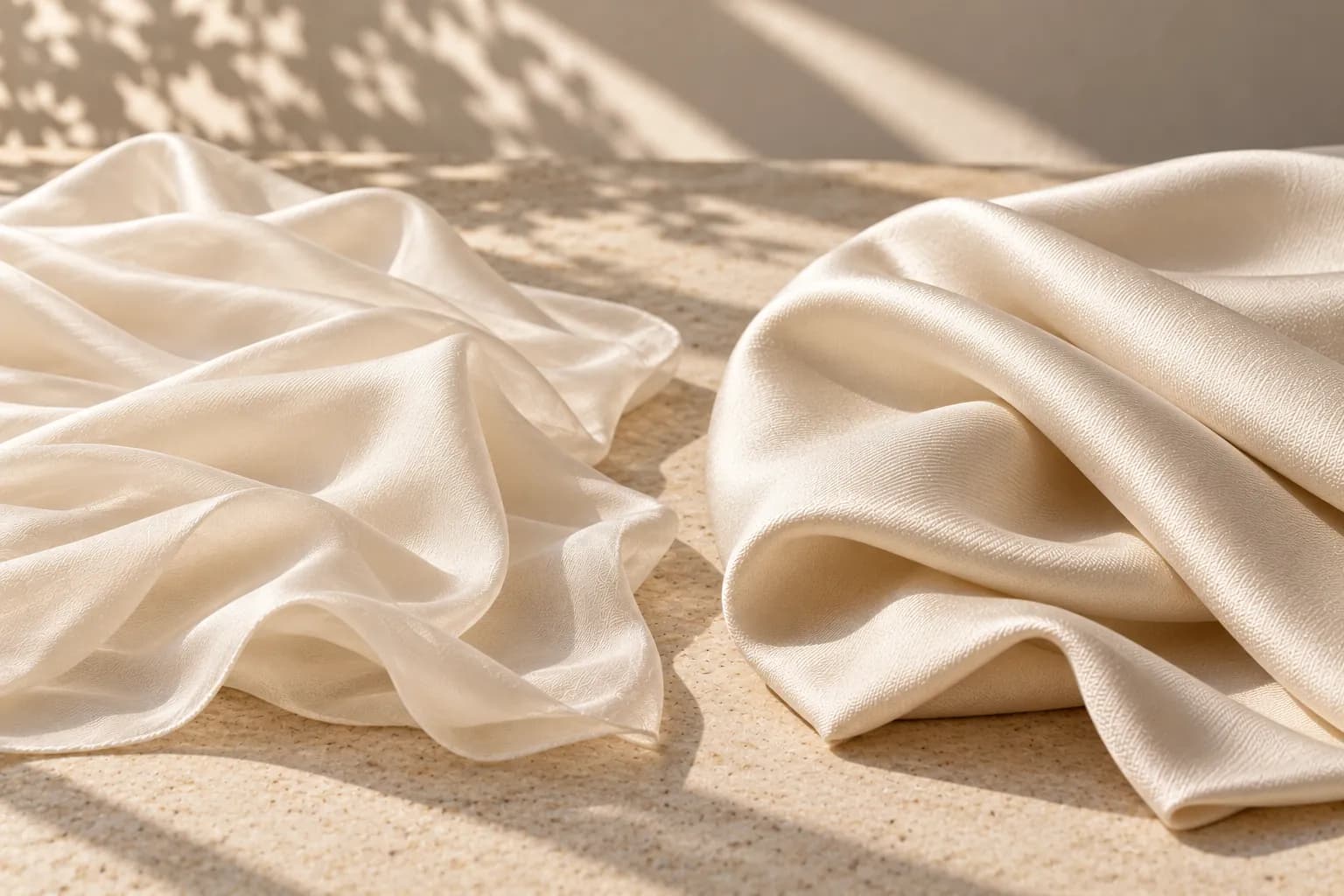
The fibre can then be worked in many ways: into twill, satin, chiffon, crêpe or organza. Mulberry silk therefore refers to the origin of the fibre, not to a type of fabric or weave.
It is now the silk most commonly used for scarves, silk squares and many silk garments.
What is wild silk?
The expression wild silk covers several silks produced by species other than Bombyx mori. The term is fairly broad, however: some of these species are raised or semi-domesticated.
Tussar, also called tussah, is one of the best-known examples. The silkworms feed on different tree species and produce silk that is often naturally beige, golden or light brown.
Compared with mulberry silk, the fibre is generally more irregular and more textured, giving fabrics a less smooth, more natural appearance.
Eri and muga silks are also often grouped within this broad family, although their rearing and production methods differ.
Which silk is the most luxurious?
Mulberry silk is most often associated with luxury fabrics. Its long, fine and even filaments make it possible to create particularly soft, smooth and uniform textiles.
Some rarer silks can nevertheless be highly prized. Muga silk, for example, produced mainly in Assam, India, is known for its naturally golden colour and limited production.
The luxurious character of a silk depends on far more than its variety: yarn quality, weave regularity, dyeing, printing and finishing all play a part in the final result.
What is the difference between satin and silk?
Silk is a fibre, whereas satin is a type of weave. Satin can therefore be made from silk, but also from polyester, viscose or other fibres.
Silk satin is simply satin made with silk yarns. It is generally recognisable by its smooth, lustrous and very soft surface.
Silk can also be used to make other fabrics, such as twill, crêpe or chiffon. The word “satin” alone is therefore not enough to tell whether a fabric is actually silk.